Zigbee Motion Sensor with Lux: How Smart Lighting Automation Really Works
Smart lighting has evolved far beyond simple motion detection. Today, advanced home automation systems rely on motion + ambient light data to make intelligent decisions — turning lights on only when they are truly needed.
This is where a Zigbee motion sensor with lux becomes essential.
Instead of triggering lights every time motion is detected, a motion sensor equipped with an illuminance (lux) sensor can determine whether the environment is already bright enough, enabling smarter, more energy-efficient automation.
In this guide, we explain how Zigbee motion sensors with lux work, why they are increasingly used in smart lighting projects, and what system integrators and automation users should consider when selecting one.
What Is a Zigbee Motion Sensor with Lux?
A Zigbee motion sensor with lux combines two sensing capabilities in one device:
PIR motion detection – detects human movement based on infrared radiation
Illuminance (lux) measurement – measures ambient light intensity in real time
By transmitting both motion and light data over a Zigbee 3.0 network, the sensor allows smart platforms to create context-aware lighting automations.
For example:
Motion detected and light level below 50 lux → turn on lights
Motion detected but light level above 300 lux → do nothing
This dual-condition logic is impossible with a motion-only sensor.
Why Lux-Based Motion Sensors Are Critical for Smart Lighting
1. Prevent Unnecessary Lighting
One of the most common complaints in smart homes and commercial buildings is lights turning on during daytime.
A lux-enabled Zigbee motion sensor solves this by ensuring lights activate only when natural light is insufficient, reducing energy waste and improving user comfort.
2. Enable Advanced Automation Logic
With lux data, automation platforms can create more refined rules, such as:
Different light brightness levels depending on ambient light
Night-only motion lighting for hallways or staircases
Adaptive lighting behavior across seasons
This is especially valuable in Home Assistant, Tuya, and BMS-based systems where rule-based logic is widely used.
3. Improve User Experience in Residential and Commercial Projects
In offices, hotels, and multi-unit residential buildings, lighting automation must feel natural.
Lux-aware motion sensors help:
Avoid sudden brightness during daytime
Maintain consistent lighting behavior across different rooms
Reduce manual overrides by occupants
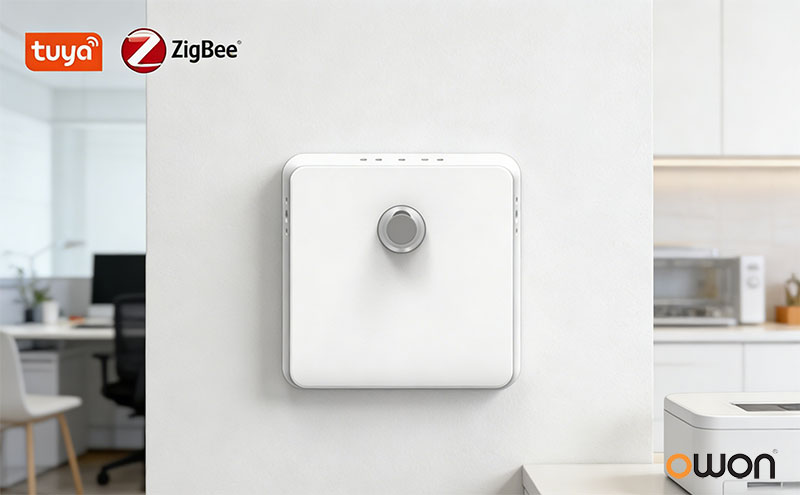
Typical Use Cases for Zigbee Motion Sensors with Lux
Smart Home Lighting
Hallways
Staircases
Bathrooms
Bedrooms with night lighting scenes
Commercial & Light BMS Projects
Office corridors
Meeting rooms
Hotel guest room entry lighting
Public restrooms
Energy-Saving Retrofits
Motion-based lighting upgrades
Wireless Zigbee deployments without rewiring
Battery-powered installations
Key Features to Look for in a Zigbee Motion Sensor with Lux
Not all Zigbee motion sensors with illuminance perform the same. When evaluating devices, consider the following factors:
1. Motion Detection Accuracy
Detection range and angle (e.g., 6m / 120°)
False trigger resistance
Stable reporting behavior
2. Lux Measurement Resolution
Ability to detect low-light changes
Reliable lux values for automation thresholds
Real-time reporting rather than delayed updates
3. Battery Life
Ultra-low standby current
Efficient Zigbee reporting strategy
Clear low-battery alerts
Battery life is often a deciding factor in large-scale deployments where maintenance costs matter.
4. Zigbee 3.0 Compatibility
A true Zigbee 3.0 sensor ensures:
Better interoperability
Stable mesh networking
Compatibility with mainstream gateways and platforms
Zigbee Motion Sensor with Lux in Automation Platforms
Home Assistant
Lux-enabled motion sensors are widely used in Home Assistant to create:
Motion + light conditional automations
Time-based and brightness-based scenes
Energy-saving lighting logic
The ability to access both motion and illuminance entities makes automation more precise and reliable.
Tuya Zigbee Ecosystem
In Tuya-based systems, Zigbee motion sensors with lux support:
App-based automation
Scene logic without local coding
Integration with smart lighting, switches, and gateways
This makes them attractive for both consumer and professional deployments.
Why Multi-Sensor Design Matters
Instead of deploying separate motion and light sensors, many projects now prefer multi-sensor Zigbee devices that combine:
Motion
Illuminance
Temperature
Humidity
This approach:
Reduces device count
Simplifies installation
Lowers battery replacement workload
Improves overall system efficiency
A well-designed Zigbee motion sensor with lux fits naturally into this multi-sensor strategy.
Final Thoughts: Is a Zigbee Motion Sensor with Lux Worth It?
For system integrators and automation designers evaluating real-world lighting applications, this zigbee motion sensor with lux provides a practical reference for implementing motion- and ambient-light–based automation in Zigbee systems.
If your goal is smart lighting that feels intelligent rather than intrusive, the answer is yes.
Compared with basic motion sensors, a Zigbee motion sensor with lux delivers:
Smarter automation logic
Better energy efficiency
Improved user satisfaction
Greater flexibility across platforms
Whether you are designing a smart home, deploying a commercial lighting project, or building a Zigbee-based automation system, lux-enabled motion sensing is no longer a luxury feature — it is quickly becoming a best practice.
Practical Reference
For system integrators and automation designers evaluating real-world lighting applications, you may find this zigbee motion sensor with lux helpful as a practical reference.